

Hey there! As a methanol supplier, I've seen firsthand how various factors can influence the methanol synthesis process. One of the most crucial elements that play a significant role is pressure. In this blog post, I'm gonna break down how pressure affects methanol synthesis and why it matters to us in the industry.
The Basics of Methanol Synthesis
Before we dive into the impact of pressure, let's quickly go over the basics of methanol synthesis. Methanol (CH₃OH) is typically produced from synthesis gas, which is a mixture of carbon monoxide (CO), carbon dioxide (CO₂), and hydrogen (H₂). The main reactions involved in methanol synthesis are as follows:
CO + 2H₂ ⇌ CH₃OH
CO₂ + 3H₂ ⇌ CH₃OH + H₂O
These reactions are exothermic and reversible, meaning they can go in both directions depending on the conditions. The goal of the synthesis process is to shift the equilibrium towards the production of methanol.
How Pressure Affects the Reaction Equilibrium
According to Le Chatelier's principle, when a system at equilibrium is subjected to a change in pressure, temperature, or concentration, the system will adjust to counteract the change and re - establish equilibrium. In the case of methanol synthesis, increasing the pressure favors the side of the reaction with fewer moles of gas.
Looking at the reaction equations above, for the reaction CO + 2H₂ ⇌ CH₃OH, there are 3 moles of reactants (1 mole of CO and 2 moles of H₂) and 1 mole of product (CH₃OH). For the reaction CO₂ + 3H₂ ⇌ CH₃OH + H₂O, there are 4 moles of reactants and 2 moles of products. So, in both cases, increasing the pressure will shift the equilibrium towards the formation of methanol.
Higher pressure essentially squeezes the gas molecules closer together, increasing the frequency of collisions between reactant molecules. This leads to a higher probability of successful reactions and thus more methanol production.
Impact on Reaction Rate
Apart from shifting the equilibrium, pressure also has a direct impact on the reaction rate. The reaction rate is proportional to the concentration of the reactants. When the pressure is increased, the volume of the gas mixture decreases, and according to the ideal gas law (PV = nRT), the concentration of the reactants (n/V) increases.
With a higher concentration of reactants, the molecules are more likely to collide with each other, and the reaction rate speeds up. This means that at higher pressures, methanol can be produced more quickly, which is great for industrial production as it allows for higher throughput.
Optimal Pressure Range for Methanol Synthesis
In industrial methanol synthesis, the pressure typically ranges from 50 to 100 bar. At pressures below this range, the reaction rate and equilibrium conversion to methanol are relatively low. On the other hand, extremely high pressures can also pose problems.
High - pressure equipment is more expensive to build and maintain. There are also safety concerns associated with operating at very high pressures. Additionally, at extremely high pressures, side reactions may become more prominent, leading to the formation of unwanted by - products.
Real - World Implications for a Methanol Supplier
As a methanol supplier, understanding the role of pressure in methanol synthesis is crucial for ensuring a stable and efficient production process. We need to strike a balance between maximizing methanol yield and keeping production costs under control.
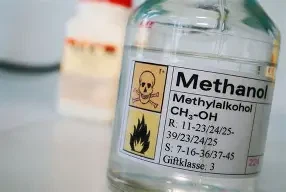
When the pressure is optimized, we can produce high - quality methanol more efficiently, which allows us to offer competitive prices to our customers. Our Methanol – Solvent Grade For Paints, Inks & Industrial Cleaners is a prime example of the result of a well - optimized synthesis process. The high - quality methanol we produce can be used in a wide range of applications, from paints and inks to industrial cleaners.
Other Factors Affecting Methanol Synthesis Alongside Pressure
Pressure doesn't work in isolation. Other factors such as temperature, catalyst activity, and the composition of the synthesis gas also play important roles in methanol synthesis.
Temperature affects the reaction rate and equilibrium in a different way compared to pressure. Higher temperatures generally increase the reaction rate but can shift the equilibrium away from methanol production due to the exothermic nature of the reactions.
Catalysts are used to speed up the reaction without being consumed in the process. A good catalyst can significantly improve the efficiency of methanol synthesis, even at relatively lower pressures.
The composition of the synthesis gas, specifically the ratio of CO, CO₂, and H₂, also impacts the methanol yield. An appropriate ratio needs to be maintained to ensure optimal reaction conditions.
Our Product Range and Applications
In addition to our high - quality methanol, we also offer other related products. For example, our Ethylene Glycol For Deicing & Aviation Fluids is an important product in the aviation and transportation industries. Ethylene glycol has excellent anti - freezing properties, making it ideal for use in deicing fluids.
We also supply Glycerol – Industrial Grade For Lubricants And Plastics. Glycerol is a versatile industrial chemical that can be used in the production of lubricants, plastics, and many other products.
Conclusion and Call to Action
Pressure is a key factor in methanol synthesis, influencing both the equilibrium and the reaction rate. By carefully controlling the pressure and other reaction conditions, we can produce high - quality methanol efficiently.
If you're in the market for methanol or any of our other products, we'd love to hear from you. Whether you need methanol for industrial cleaners or ethylene glycol for aviation fluids, we have the expertise and products to meet your needs. Contact us to start a discussion about your requirements and how we can work together to find the best solutions.
References
- Smith, J. M., Van Ness, H. C., & Abbott, M. M. (2001). Introduction to Chemical Engineering Thermodynamics. McGraw - Hill.
- Froment, G. F., Bischoff, K. B., & De Wilde, J. (2011). Chemical Reactor Analysis and Design. Wiley.