

Polar Aprotic Solvents
Your Professional Carboxylic Acid Manufacturer
Shandong Ruishuang Chemical Co., Ltd. is located in the High-tech Development Zone of Zibo City, Shandong Province. It specializes in the production and sales of various organic chemical solvents. With 30 years of rich experience, the company's products are widely used in pesticides, medicines, polyesters, coatings, dyes and petrochemicals. Our products include Acrylic Acid, Formic Acid, Acetic Acid, etc.
Why Choose Us
Quality Control
The company collaborates extensively with authoritative technical centers, laboratories, and testing institutions to ensure that each batch of products undergoes rigorous inspection and meets stringent quality standards.
Sales Market
Our products are exported to a wide range of countries and regions, including North America, South America, the Middle East, Southeast Asia, India, and Pakistan. They have earned widespread market recognition and customer trust.
Patent Certificate
The company's products comply with both domestic and international quality standards and have been awarded ISO9001 certification, guaranteeing their high quality and reliability.
One-stop Service
The company has established a comprehensive supply chain system that integrates warehousing, packaging, logistics, and transportation. This system provides global customers with all-encompassing and high-quality products and services, both online and offline.
-
![Sulfolane – Solvent For Carbon Capture And Clean Energy Applications]() Sulfolane – Solvent For Carbon Capture And Clean Energy A...Sulfolane has proven performance in physical absorption of CO₂ and other gases, making it valuable in carbon capture technologies. Ruishuang Chemical offers industrial-scale supply to support...read more
Sulfolane – Solvent For Carbon Capture And Clean Energy A...Sulfolane has proven performance in physical absorption of CO₂ and other gases, making it valuable in carbon capture technologies. Ruishuang Chemical offers industrial-scale supply to support...read more -
![DMAC For High-Tech Polymers And Specialty Material Production]() DMAC For High-Tech Polymers And Specialty Material Produc...Dimethylacetamide supports the production of high-performance polymers such as liquid crystal polymers (LCPs), polyimides, and photoresist materials. Its high thermal resistance and polarity make...read more
DMAC For High-Tech Polymers And Specialty Material Produc...Dimethylacetamide supports the production of high-performance polymers such as liquid crystal polymers (LCPs), polyimides, and photoresist materials. Its high thermal resistance and polarity make...read more -
![DMSO For Textile And Dye Industry – High Compatibility Solvent]() DMSO For Textile And Dye Industry – High Compatibility So...DMSO plays a vital role in textile dyeing and processing, especially for synthetic fibers. Its ability to dissolve a wide range of dyes and polymers allows it to be used as a carrier and penetrant...read more
DMSO For Textile And Dye Industry – High Compatibility So...DMSO plays a vital role in textile dyeing and processing, especially for synthetic fibers. Its ability to dissolve a wide range of dyes and polymers allows it to be used as a carrier and penetrant...read more -
![N,N-Dimethylformamide(DMF)]() N,N-Dimethylformamide(DMF)N,N-Dimethylformamide (CAS 68-12-2), a polar aprotic solvent with molecular formula C₃H₇NO, is produced to ≥99.9% purity for critical industrial applications requiring ultra-low impurities.read more
N,N-Dimethylformamide(DMF)N,N-Dimethylformamide (CAS 68-12-2), a polar aprotic solvent with molecular formula C₃H₇NO, is produced to ≥99.9% purity for critical industrial applications requiring ultra-low impurities.read more -
![N,N-Dimethylformamide(DMF) 99.9%]() N,N-Dimethylformamide(DMF) 99.9%N,N-Dimethylformamide is a polar aprotic solvent with the molecular formula C₃H₇NO. Widely used in pharmaceuticals and polymer production.read more
N,N-Dimethylformamide(DMF) 99.9%N,N-Dimethylformamide is a polar aprotic solvent with the molecular formula C₃H₇NO. Widely used in pharmaceuticals and polymer production.read more -
![Tetrahydrofuran (THF)]() Tetrahydrofuran (THF)In the presence of strong acids, THF converts to a linear polymer called poly(tetramethylene ether) glycol (PTMEG), also known as polytetramethylene oxide (PTMO)read more
Tetrahydrofuran (THF)In the presence of strong acids, THF converts to a linear polymer called poly(tetramethylene ether) glycol (PTMEG), also known as polytetramethylene oxide (PTMO)read more -
![Dimethylacetamide (DMAC)]() Dimethylacetamide (DMAC)N,N−Dimethylacetamide (DMAc) is a dipolar, aprotic, high-boiling, oily solvent and reagent. It is miscible with water and most oxygen- and nitrogen-containing organic solvents. It has a faint...read more
Dimethylacetamide (DMAC)N,N−Dimethylacetamide (DMAc) is a dipolar, aprotic, high-boiling, oily solvent and reagent. It is miscible with water and most oxygen- and nitrogen-containing organic solvents. It has a faint...read more -
![N,N-DimethyIformamide(DMF)]() N,N-DimethyIformamide(DMF)N,N-Dimethylformamide (DMF) is an excellent polar solvent for various classes of compounds, the dissolution being favoured by interactions of the substrate with DMF.read more
N,N-DimethyIformamide(DMF)N,N-Dimethylformamide (DMF) is an excellent polar solvent for various classes of compounds, the dissolution being favoured by interactions of the substrate with DMF.read more -
![Acetonitrile (ACN)]() Acetonitrile (ACN)In the laboratory, it is used as a medium-polarity non-protic solvent that is miscible with water and a range of organic solvents, but not saturated hydrocarbons.read more
Acetonitrile (ACN)In the laboratory, it is used as a medium-polarity non-protic solvent that is miscible with water and a range of organic solvents, but not saturated hydrocarbons.read more -
![Tetrahydrofuran – High-Purity Solvent For Energy Storage Applications]() Tetrahydrofuran – High-Purity Solvent For Energy Storage ...We supply THF with ultra-low impurity levels, perfect for use in battery electrolytes and energy storage technologies requiring stringent material specifications.read more
Tetrahydrofuran – High-Purity Solvent For Energy Storage ...We supply THF with ultra-low impurity levels, perfect for use in battery electrolytes and energy storage technologies requiring stringent material specifications.read more -
![Tetrahydrofuran (THF) – Essential Solvent For Synthetic Fiber Production]() Tetrahydrofuran (THF) – Essential Solvent For Synthetic F...THF from Ruishuang Chemical is optimized for use in fiber manufacturing, ensuring high polymer solubility and consistent production efficiency.read more
Tetrahydrofuran (THF) – Essential Solvent For Synthetic F...THF from Ruishuang Chemical is optimized for use in fiber manufacturing, ensuring high polymer solubility and consistent production efficiency.read more -
![Tetrahydrofuran Reliable Solvent For Elastomer Processing]() Tetrahydrofuran Reliable Solvent For Elastomer ProcessingOur THF is developed to support elastomer manufacturing processes, ensuring optimal polymer dissolution and uniformity in final products.read more
Tetrahydrofuran Reliable Solvent For Elastomer ProcessingOur THF is developed to support elastomer manufacturing processes, ensuring optimal polymer dissolution and uniformity in final products.read more


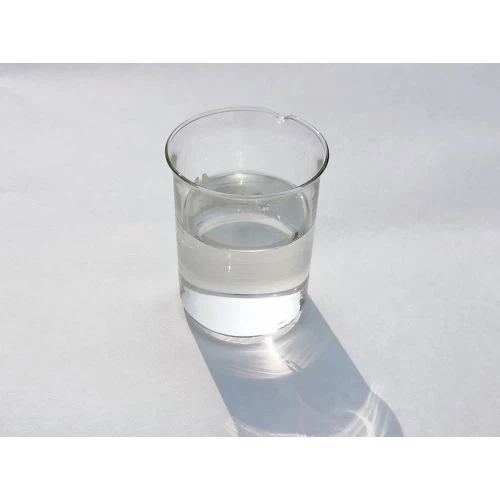
Polar aprotic solvents are a unique class of high-polarity solvents that do not donate hydrogen atoms (protons) via hydrogen bonding. Characterized by their strong dipole moments and ability to dissolve a wide range of ionic and non-ionic compounds, these solvents play an indispensable role in organic synthesis, pharmaceutical manufacturing, polymer processing, and electronics production.
Our Best-Selling Dipolar Aprotic Products


Dimethyl Sulfoxide(DMSO)
Dimethyl sulfoxide (DMSO) is an extremely important universal solvent that is soluble in both water and organic solvents. It is an important polar aprotic solvent that dissolves both polar and nonpolar compounds and is miscible in a wide range of organic solvents as well as water.
Dimethylacetamide (DMAC)
N,N−Dimethylacetamide (DMAc) is a dipolar, aprotic, high-boiling, oily solvent and reagent. It is miscible with water and most oxygen- and nitrogen-containing organic solvents. It has a faint ammonia odor.
N,N-DimethyIformamide(DMF)
N,N-Dimethylformamide (DMF) is an excellent polar solvent for various classes of compounds, the dissolution being favoured by interactions of the substrate with DMF.
Glycerol
Glycerol is a simple triol compound. It is a colorless, odorless, viscous liquid that is sweet-tasting and non-toxic. The glycerol backbone is found in lipids known as glycerides. It is also widely used as a sweetener in the food industry and as a humectant in pharmaceutical formulations.
Our Company Has More Products to Offer, Please Browse the Product Categories on the Website, If You Have Any Needs, Please Contact Us.
polar Aprotic Properties
| Solvent Name | Chemical Formula | Boiling Point (°C) | Dielectric Constant (ε) | Density (g/cm³, 20°C) | Dipole Moment (D) |
|---|---|---|---|---|---|
| N-Methyl-2-pyrrolidone (NMP) | C₅H₉NO | 202 | 32 | 1.028 | 4.09 |
| N,N-Dimethylformamide (DMF) | C₃H₇NO | 153 | 36.7 | 0.944 | 3.82 |
| N,N-Dimethylacetamide (DMAc) | C₄H₉NO | 165 | 37.8 | 0.937 | 3.72 |
| Dimethyl Sulfoxide (DMSO) | C₂H₆OS | 189 | 46.7 | 1.100 | 3.96 |
| Sulfolane | C₄H₈O₂S | 285 | 43.2 | 1.261 | 4.35 |
| Tetrahydrofuran (THF) | C₄H₈O | 66 | 7.6 | 0.889 | 1.75 |
| Acetonitrile | C₂H₃N | 82 | 37.5 | 0.786 | 3.92 |
| Dichloromethane (DCM) | CH₂Cl₂ | 40 | 9.1 | 1.325 | 1.60 |
| 1,2-Dichloroethane (EDC) | C₂H₄Cl₂ | 84.7 | 10.4 | 1.253 | 1.80 |
| Solvent Name | Chemical Formula | Molecular Structure (Text Representation) |
|---|---|---|
| N-Methyl-2-pyrrolidone (NMP) | C₅H₉NO |  |
| Dimethylformamide (DMF) | C₃H₇NO | HCON(CH₃)₂ |
| Dimethylacetamide (DMAc) | C₄H₉NO | CH₃CON(CH₃)₂ |
| Dimethyl Sulfoxide (DMSO) | C₂H₆OS | (CH₃)₂SO |
| Sulfolane | C₄H₈O₂S |  |
| Tetrahydrofuran (THF) | C₄H₈O |  |
| Acetonitrile | C₂H₃N | CH₃–C≡N |
| Dichloromethane (DCM) | CH₂Cl₂ | Cl–CH₂–Cl |
| 1,2-Dichloroethane (EDC) | C₂H₄Cl₂ | Cl–CH₂–CH₂–Cl |

Industrial Applications of polar Aprotic
Fine Chemicals & Agrochemicals
Application: Reaction media for synthesis of dyes, pesticides, herbicides, and flavors
Key Products: DMF, DMSO, Acetonitrile
Advantages: Thermally stable, compatible with acidic/alkaline reagents, high selectivity
Pharmaceuticals
Application: Solvents for synthesis of APIs, intermediates, peptides, and nucleosides
Key Products: DMF, DMAc, NMP, DMSO
Advantages: High purity, low residue, excellent solubility for polar substrates
Polymer & Resin Processing
Application: Solvents in polyimides, polyacrylonitrile, polyurethane, and PVC production
Key Products: NMP, DMAc, THF
Advantages: Solubilize high-molecular-weight polymers, support clean film casting and membrane formation
Battery & Electronics Industry
Application: Solvents in lithium-ion battery electrolyte systems, photoresist stripping, and semiconductor cleaning
Key Products: NMP, Sulfolane, DMSO, Acetonitrile
Advantages: High dielectric constant, low moisture content, safe for sensitive substrates

● Use personal protective equipment.
● Protect the skin and eyes.
● Prevent inhalation.
● Avoid working in a confined space.
● Store product safely.
● Storage: Preserve well-closed containers protect from moisture.
● Label: Can be customized
● Packing container: Packed in drums
● Quantity: 225kg/drum, 4 drums in one pallet (if needed)

Our Working Process
Set a Strategy
Determine quantity, style and delivery time.
Sign Contract
Provide efficient, high-quality services.
Production
Strict control and quality control at all levels.
Delivery
Delivery to customers according to contract time.
FAQ
We're well-known as one of the leading polar aprotic solvents manufacturers and suppliers in China. Please feel free to buy high quality polar aprotic solvents made in China here from our factory. For price consultation, contact us.