

Hey there! As an acetic acid supplier, I often get asked about the decomposition products of acetic acid. So, I thought I'd write this blog to share some cool info on this topic.
First off, let's understand what acetic acid is. It's a colorless liquid with a pungent smell, and you've probably come across it in the form of vinegar, which is basically a diluted solution of acetic acid. It's used in a ton of industries, from food to pharmaceuticals, and even in the production of various chemicals.
Now, onto the main question: what are the decomposition products of acetic acid? Well, the decomposition of acetic acid can happen in different ways, depending on the conditions like temperature, pressure, and the presence of catalysts.
Thermal Decomposition
When acetic acid is heated to high temperatures, it starts to break down. At around 440°C, acetic acid undergoes thermal decomposition. One of the main reactions is the decarboxylation process. In this reaction, acetic acid loses a carbon dioxide molecule. The chemical equation for this reaction is:
$CH_{3}COOH \rightarrow CH_{4} + CO_{2}$
So, methane ($CH_{4}$) and carbon dioxide ($CO_{2}$) are the primary products of the thermal decomposition of acetic acid at high temperatures. Methane is a hydrocarbon gas that's widely used as a fuel. It's the main component of natural gas and is used for heating, cooking, and generating electricity. Carbon dioxide, on the other hand, is a well - known greenhouse gas. It's also used in various industrial processes, like carbonation in the beverage industry.
Decomposition in the Presence of Catalysts
In the presence of certain catalysts, acetic acid can decompose in different ways. For example, when acetic acid is passed over a metal oxide catalyst like manganese oxide at high temperatures, it can form ketene and water. The reaction is as follows:
$CH_{3}COOH \rightarrow CH_{2}=C=O + H_{2}O$
Ketene ($CH_{2}=C=O$) is a highly reactive compound. It's used in the synthesis of various organic compounds, especially in the production of acetic anhydride. Acetic anhydride is an important chemical used in the manufacture of cellulose acetate, which is used in the production of films, fibers, and plastics.
Decomposition under Oxidizing Conditions
When acetic acid is exposed to strong oxidizing agents, it can be further oxidized. For instance, in the presence of potassium permanganate ($KMnO_{4}$) in an acidic medium, acetic acid can be oxidized to carbon dioxide and water. The overall reaction is a complex multi - step process, but the net result is the complete oxidation of acetic acid:
$5CH_{3}COOH + 8KMnO_{4}+ 12H_{2}SO_{4}\rightarrow 10CO_{2}+ 8MnSO_{4}+ 4K_{2}SO_{4}+ 22H_{2}O$
This kind of oxidation reaction is often used in analytical chemistry to determine the amount of acetic acid in a sample.
Significance of Decomposition Products
The decomposition products of acetic acid have various industrial applications. Methane, as mentioned earlier, is a valuable fuel source. Carbon dioxide is used in many industries, such as in the production of carbonated beverages, as a refrigerant in some applications, and in the food industry for food preservation.
Ketene is a key intermediate in the synthesis of many important chemicals. For example, it's used in the production of Formic Acid For Pharmaceutical Intermediates Production. Formic acid is widely used in the pharmaceutical industry for the synthesis of various pharmaceutical intermediates. It's also used in Formic Acid For Electroplating And Surface Treatment. In electroplating, formic acid can be used to adjust the pH of the plating bath and improve the quality of the plating.
Another important product is electronics - grade acetic acid. Our Electronics - Grade Acetic Acid For Semiconductor Cleaning And Etching is of high purity and is used in the semiconductor industry. It's used for cleaning and etching semiconductor wafers, which is a crucial step in the manufacturing of integrated circuits and other electronic components.

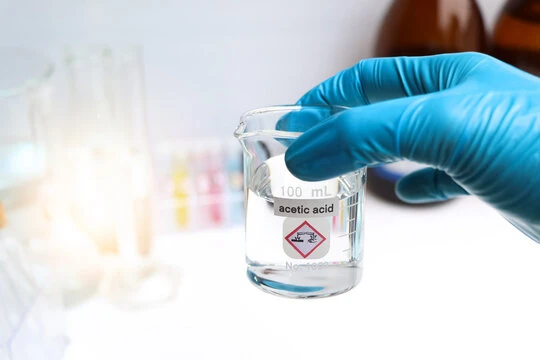
Our Role as an Acetic Acid Supplier
As an acetic acid supplier, we play a vital role in providing high - quality acetic acid to various industries. We ensure that our acetic acid meets the strict quality standards required by different applications. Whether it's for food production, where purity and safety are of utmost importance, or for chemical synthesis, where the right concentration and quality are needed for efficient reactions, we've got you covered.
We also understand the importance of the decomposition products of acetic acid. That's why we work closely with our customers to provide them with the best solutions. If you're in the pharmaceutical industry and need formic acid for pharmaceutical intermediates production, we can guide you on how to use acetic acid as a starting material to produce it efficiently.
If you're in the electronics industry and need electronics - grade acetic acid for semiconductor cleaning and etching, we can offer you the right product with the right specifications. Our team of experts is always ready to answer your questions and provide technical support.
Why Choose Us?
- Quality Assurance: We have a strict quality control system in place to ensure that our acetic acid is of the highest quality. We test our products at every stage of production to make sure they meet or exceed the industry standards.
- Reliable Supply: We have a large production capacity and a well - established supply chain. This means that we can provide you with a continuous supply of acetic acid, no matter how large your order is.
- Technical Support: Our team of experts has in - depth knowledge of acetic acid and its applications. They can provide you with technical advice and support to help you get the most out of our products.
Let's Connect
If you're interested in purchasing acetic acid or have any questions about its decomposition products and applications, don't hesitate to get in touch with us. We're always happy to have a chat and discuss how we can meet your needs. Whether you're a small - scale manufacturer or a large - scale industrial player, we're here to serve you.
References
- Atkins, P., & de Paula, J. (2006). Physical Chemistry. Oxford University Press.
- Carey, F. A., & Sundberg, R. J. (2007). Advanced Organic Chemistry. Springer.