

Alkanes, known for their saturated hydrocarbon structure, are a fundamental class of organic compounds widely used in various industries. As a leading alkanes supplier, we are committed to providing high - quality products and in - depth knowledge about alkanes. One of the significant chemical reactions involving alkanes is halogenation. In this blog, we will explore the mechanism of the halogenation of alkanes in detail.
Overview of Halogenation of Alkanes
Halogenation of alkanes is a substitution reaction in which one or more hydrogen atoms in an alkane molecule are replaced by halogen atoms (such as chlorine, bromine, etc.). The general equation for the halogenation of an alkane ((C_{n}H_{2n + 2})) with a halogen ((X_{2})) can be represented as:
(C_{n}H_{2n+2}+X_{2}\rightarrow C_{n}H_{2n + 1}X+HX)
This reaction is important in organic synthesis as it can introduce functional groups into the relatively inert alkane molecules, leading to the formation of more reactive compounds that can be further transformed into a wide range of products.
The Mechanism of Halogenation
The halogenation of alkanes typically proceeds via a free - radical mechanism, which consists of three main steps: initiation, propagation, and termination.
Initiation Step
The initiation step involves the generation of free radicals. For the halogenation of alkanes with chlorine ((Cl_{2})) as an example, the reaction is usually initiated by heat or light (usually ultraviolet light). The energy provided by heat or light is sufficient to break the relatively weak (Cl - Cl) bond homolytically, resulting in the formation of two chlorine radicals ((Cl\cdot)):
(Cl_{2}\xrightarrow{h\nu\text{ or }\Delta}2Cl\cdot)
A chlorine radical is a highly reactive species because it has an unpaired electron. This unpaired electron makes the chlorine radical eager to react with other molecules to achieve a more stable electron configuration.
Propagation Step
The propagation step is where the actual substitution of hydrogen atoms in the alkane by halogen atoms occurs. There are two sub - steps in the propagation phase.
Step 1: Hydrogen abstraction
The chlorine radical ((Cl\cdot)) attacks a hydrogen atom in the alkane molecule. For example, in the case of methane ((CH_{4})), the chlorine radical abstracts a hydrogen atom from methane, forming a methyl radical ((CH_{3}\cdot)) and hydrogen chloride ((HCl)):
(Cl\cdot+CH_{4}\rightarrow CH_{3}\cdot+HCl)
The methyl radical is also a highly reactive species with an unpaired electron. It then reacts with another chlorine molecule in the second sub - step.
Step 2: Radical - halogen reaction
The methyl radical ((CH_{3}\cdot)) reacts with a chlorine molecule ((Cl_{2})) to form chloromethane ((CH_{3}Cl)) and a new chlorine radical ((Cl\cdot)):
(CH_{3}\cdot+Cl_{2}\rightarrow CH_{3}Cl + Cl\cdot)
The newly formed chlorine radical can then continue to react with another alkane molecule, repeating the propagation steps. This is why the reaction can continue until one of the reactants is exhausted.
It should be noted that if more than one hydrogen atom in the alkane is available for substitution, multiple products can be formed. For example, in the chlorination of ethane ((C_{2}H_{6})), different isomers of chloroethane can be produced, and further substitution can lead to the formation of dichloroethanes, trichloroethanes, and so on.
Termination Step
The termination step involves the combination of free radicals to form stable molecules. There are several possible termination reactions. For example:
- Two chlorine radicals can combine to form a chlorine molecule: (2Cl\cdot\rightarrow Cl_{2})
- A methyl radical and a chlorine radical can combine to form chloromethane: (CH_{3}\cdot+Cl\cdot\rightarrow CH_{3}Cl)
- Two methyl radicals can combine to form ethane: (2CH_{3}\cdot\rightarrow C_{2}H_{6})
As the free radicals are consumed in these termination reactions, the reaction eventually stops.
Selectivity in Halogenation
The selectivity of halogenation refers to the preference for the substitution of different types of hydrogen atoms in an alkane. In general, bromination is more selective than chlorination.
In an alkane, there are primary ((1^{\circ})), secondary ((2^{\circ})), and tertiary ((3^{\circ})) hydrogen atoms. Tertiary hydrogen atoms are the most easily abstracted, followed by secondary hydrogen atoms, and then primary hydrogen atoms. This is because the stability of the resulting radicals follows the order: (3^{\circ}\text{ radical}>2^{\circ}\text{ radical}>1^{\circ}\text{ radical}).
For bromination, the difference in reactivity between different types of hydrogen atoms is more pronounced. For example, in the bromination of 2 - methylpropane, the major product is 2 - bromo - 2 - methylpropane, which is formed by the substitution of the tertiary hydrogen atom. In contrast, chlorination is less selective, and a mixture of products is usually obtained.
Applications in Industry
The halogenation of alkanes has numerous applications in the chemical industry. For example, chlorinated alkanes are used as solvents, intermediates in the synthesis of pesticides, and in the production of plastics.
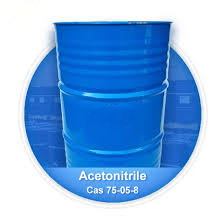
As an alkanes supplier, we understand the importance of these reactions in various industries. We offer a wide range of high - quality alkanes that can be used as starting materials for halogenation reactions. Our products, such as Eco - Conscious Acrylonitrile – Sustainable Sourcing For A Greener Future, Cyclohexane – Polymer Grade Solvent For High - Performance Polyolefins, and Acrylonitrile For Acrylic Fiber & Textiles, are carefully sourced and processed to meet the strict requirements of our customers.

Contact for Procurement
If you are interested in our alkanes products for your halogenation reactions or other applications, we invite you to contact us for procurement discussions. Our team of experts is ready to provide you with detailed product information, technical support, and competitive pricing. Whether you are a small - scale laboratory or a large - scale industrial manufacturer, we can meet your specific needs.
References
- Carey, F. A., & Sundberg, R. J. (2007). Advanced Organic Chemistry: Part A: Structure and Mechanisms. Springer.
- McMurry, J. (2012). Organic Chemistry. Brooks/Cole Cengage Learning.
- Wade, L. G. (2013). Organic Chemistry. Pearson.