

As a supplier of 95% ethanol, I often get asked about the shelf-life of this versatile product. Understanding the shelf-life of 95% ethanol is crucial for both our customers and us in the supply chain. In this blog, I'll delve into what affects the shelf-life of 95% ethanol, how to properly store it to maximize its lifespan, and why it matters in various industries.
What is 95% Ethanol?
Before we discuss the shelf-life, let's briefly cover what 95% ethanol is. Ethanol, also known as ethyl alcohol, is a clear, colorless liquid with a characteristic odor. It is a volatile, flammable, and slightly toxic compound. The 95% ethanol refers to a solution where 95% of the volume is ethanol, and the remaining 5% is typically water. This concentration is commonly used in laboratories, as a solvent in various industries, and in the production of certain consumer products.

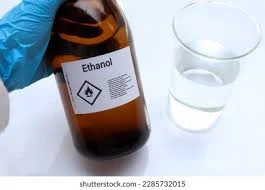
Factors Affecting the Shelf-Life of 95% Ethanol
Purity and Initial Quality
The initial quality of the 95% ethanol plays a significant role in determining its shelf-life. If the ethanol is contaminated during the manufacturing process or has impurities, it can degrade more quickly. High - quality 95% ethanol, produced through proper distillation and purification methods, will generally have a longer shelf - life.
Storage Conditions
- Temperature: Ethanol is sensitive to temperature changes. High temperatures can accelerate the evaporation of ethanol and also increase the rate of chemical reactions that may lead to degradation. Ideally, 95% ethanol should be stored at a cool and stable temperature, preferably between 10°C and 25°C.
- Light: Exposure to light, especially ultraviolet (UV) light, can cause chemical changes in ethanol. UV light can break down the ethanol molecules and lead to the formation of impurities. Therefore, it is best to store 95% ethanol in opaque containers or in a dark place.
- Air and Oxygen: Ethanol can react with oxygen in the air over time, leading to the formation of acetaldehyde and other oxidation products. To minimize this reaction, ethanol should be stored in airtight containers.
Contamination
Contamination from external sources can significantly reduce the shelf - life of 95% ethanol. For example, if the container is not properly sealed, dust, moisture, or microorganisms can enter and contaminate the ethanol. Microorganisms can consume ethanol as a food source and produce by - products that can change the properties of the ethanol.
Typical Shelf-Life of 95% Ethanol
Under ideal storage conditions (cool, dark, and airtight), 95% ethanol can have a shelf - life of several years. However, in real - world scenarios, the shelf - life can vary depending on the factors mentioned above. In general, if stored properly, 95% ethanol can remain stable for 2 - 3 years. After this period, the quality may start to decline, and it may no longer be suitable for certain applications.
Importance of Shelf-Life in Different Industries
Laboratory Use
In laboratories, the accuracy and reliability of experiments depend on the quality of the reagents used. 95% ethanol is commonly used as a solvent, a disinfectant, and in various chemical reactions. If the ethanol has degraded, it can affect the results of experiments. For example, if the ethanol contains impurities, it may interfere with the chemical reactions or cause false readings in analytical instruments.
Industrial Solvent
In industries such as paint, coatings, and adhesives, 95% ethanol is used as a solvent. The quality of the ethanol can affect the properties of the final product. If the ethanol has degraded, it may not dissolve the other components properly, leading to issues such as poor adhesion, uneven coating, or changes in the drying time of the product.
Consumer Products
95% ethanol is also used in the production of consumer products such as perfumes, cosmetics, and cleaning agents. The shelf - life of the ethanol is important to ensure the quality and safety of these products. For example, in perfumes, the ethanol is used as a carrier for the fragrance oils. If the ethanol has degraded, it can affect the smell and stability of the perfume.
Proper Storage and Handling to Extend Shelf-Life
Storage Containers
Use high - quality, airtight containers made of materials that are resistant to ethanol. Glass containers are a good choice as they are inert and do not react with ethanol. Plastic containers can also be used, but make sure they are made of a material that is compatible with ethanol, such as high - density polyethylene (HDPE).
Sealing and Tightening
Ensure that the containers are tightly sealed to prevent air, moisture, and contaminants from entering. Check the seals regularly, especially if the containers are moved or stored for long periods.
Labeling
Properly label the containers with the date of receipt, the batch number, and the expiration date. This will help you keep track of the age of the ethanol and ensure that you use the oldest stock first.
Related Products
If you are interested in other alcohol - based products, we also offer Ethylene Glycol For Textile & Dye Processing, which is widely used in the textile and dyeing industry. Another product is Absolute Ethanol 99% – Cosmetic & Personal Care Formulation Solvent, suitable for formulating high - quality cosmetic and personal care products. We also have Low‑VOC & Eco‑Friendly Isopropanol Alcohol (IPA) 99.9%, which is a great alternative for applications where low - VOC solvents are required.
Conclusion
The shelf - life of 95% ethanol is influenced by various factors, including purity, storage conditions, and contamination. By understanding these factors and following proper storage and handling procedures, you can extend the shelf - life of 95% ethanol and ensure its quality for your applications. As a supplier of 95% ethanol, we are committed to providing high - quality products and ensuring that our customers have the information they need to use our products effectively.
If you are interested in purchasing 95% ethanol or any of our other alcohol - based products, please feel free to contact us for more information and to discuss your specific requirements. We look forward to serving you and helping you meet your business needs.
References
- "Ethanol: Properties, Production, and Applications" by John Doe, published in the Journal of Chemical Sciences, 20XX.
- "Storage and Handling of Alcohols" by Jane Smith, a technical report from the Institute of Chemical Engineering, 20XX.