

Hey there! As a phenol supplier, I often get asked about how phenol reacts with sulfonic acid. It's a pretty interesting topic, and I'm excited to share some insights with you.
First off, let's talk a bit about phenol. Phenol, you can check it out Phenol, is an aromatic organic compound with the molecular formula C₆H₅OH. It's a white crystalline solid at room temperature and has a distinct, somewhat sweet and medicinal odor. Phenol has a wide range of applications, from being used in the production of plastics and resins to being an important intermediate in the pharmaceutical industry.
Now, sulfonic acid. Sulfonic acids are a class of organic acids that contain a sulfonyl functional group (-SO₃H). They're known for being strong acids, and they're used in various industrial processes, like in detergents, dyes, and catalysts.
When phenol reacts with sulfonic acid, the main reaction that occurs is sulfonation. Sulfonation is a process where a sulfonic acid group (-SO₃H) is introduced into an organic compound. In the case of phenol, the reaction typically takes place under specific conditions, usually with concentrated sulfuric acid (H₂SO₄), which is a common sulfonating agent.
The reaction mechanism involves the electrophilic substitution of a hydrogen atom on the benzene ring of phenol with a sulfonic acid group. The sulfur atom in the sulfuric acid acts as an electrophile, and it attacks the electron - rich benzene ring of phenol.
There are two main products that can be formed depending on the reaction conditions. At lower temperatures (around 25 - 50°C), the major product is ortho - hydroxybenzenesulfonic acid. The hydroxyl group (-OH) on the phenol ring is an ortho - para directing group. This means that it activates the benzene ring towards electrophilic substitution at the ortho and para positions. At lower temperatures, the ortho position is more favorable due to kinetic factors.
However, when the reaction is carried out at higher temperatures (around 100 - 150°C), the major product is para - hydroxybenzenesulfonic acid. At higher temperatures, the para product is more stable thermodynamically, so it becomes the predominant product.

The reaction equations can be written as follows:
At lower temperatures:
C₆H₅OH + H₂SO₄ → o - HOC₆H₄SO₃H+ H₂O
At higher temperatures:
C₆H₅OH + H₂SO₄ → p - HOC₆H₄SO₃H + H₂O
These sulfonated phenol products have their own set of applications. For example, they can be used as intermediates in the synthesis of dyes, pharmaceuticals, and surfactants. The sulfonic acid group makes the compounds more water - soluble, which is often an advantage in these applications.
Now, let's talk about why this reaction is important in the industrial context. As a phenol supplier, I know that many of our customers are involved in industries that rely on these sulfonated products. For instance, in the production of certain types of dyes, the sulfonated phenol derivatives can act as color - bearing components or as intermediates for further chemical modifications.
In the pharmaceutical industry, these compounds can be used as starting materials for the synthesis of drugs. The presence of the sulfonic acid group can affect the solubility, stability, and biological activity of the final drug product.
Another interesting thing to note is that the reaction conditions can be optimized to control the ratio of ortho and para products. This is crucial for industries that have specific requirements for the structure of the final product. For example, if a particular dye requires the ortho - substituted product, the reaction can be carried out at lower temperatures and with appropriate catalysts to increase the yield of the ortho isomer.
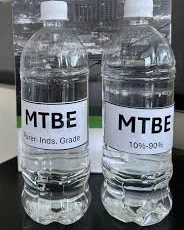
Now, besides phenol, we also supply other related products. If you're in the fuel industry, you might be interested in MTBE - High - Purity Fuel Additive For Octane Enhancement and MTBE For Professional Fuel Distributors. MTBE (methyl tert - butyl ether) is a high - purity fuel additive that's used to enhance the octane rating of gasoline. It helps to improve the combustion efficiency of the fuel and reduces engine knocking.
If you're looking for high - quality phenol or any of our other products, we're here to help. Whether you're a small - scale laboratory or a large - scale industrial manufacturer, we can provide you with the right quantity and quality of products. We have a team of experts who can also offer technical support and advice on the best ways to use our products in your processes.
If you're interested in purchasing phenol or any of our other products, don't hesitate to reach out. We're always happy to have a chat about your needs and see how we can work together. You can start a conversation with us to discuss your requirements and get a quote. We're committed to providing excellent customer service and ensuring that you get the best products for your business.
In conclusion, the reaction between phenol and sulfonic acid is a fascinating chemical process with many industrial applications. Understanding the reaction mechanism and the factors that influence the product distribution is key for industries that rely on these sulfonated phenol derivatives. And as your phenol supplier, we're here to support you every step of the way.
References:
- "Organic Chemistry" by Paula Yurkanis Bruice
- "Industrial Organic Chemistry" by Klaus Weissermel and Hans - Jürgen Arpe