

As an alkanes supplier, I often get asked about the general formula of alkanes. It's a fundamental concept in organic chemistry, and understanding it can help you grasp a lot about these important hydrocarbons.
Let's start from the basics. Alkanes are a class of organic compounds that consist entirely of carbon (C) and hydrogen (H) atoms, and they contain only single - covalent bonds. They're also known as saturated hydrocarbons because each carbon atom forms the maximum number of bonds possible.
The general formula for alkanes is (C_{n}H_{2n + 2}), where “n” represents the number of carbon atoms in the molecule. This formula is super useful as it allows you to quickly figure out the molecular formula of any alkane if you know the number of carbon atoms.
For instance, when (n = 1), we have (C_{1}H_{2\times1+ 2}=CH_{4}), which is methane. Methane is a well - known alkane; it's the main component of natural gas and is used widely for heating and cooking. When (n = 2), the formula becomes (C_{2}H_{2\times2 + 2}=C_{2}H_{6}), and this compound is ethane. Ethane is also used as a fuel and as a starting material in the petrochemical industry.
As the value of “n” increases, the physical properties of alkanes change. Smaller alkanes like methane, ethane, propane ((C_{3}H_{8})) and butane ((C_{4}H_{10})) are gases at room temperature. They have relatively low boiling and melting points because the intermolecular forces between their molecules are weak London dispersion forces. These forces increase with the size and mass of the molecules.
When (n) ranges from 5 to 17, the alkanes are liquids. Pentane ((C_{5}H_{12})), hexane ((C_{6}H_{14})), and heptane ((C_{7}H_{16})) are examples of liquid alkanes. They're often used as solvents in various industries. For example, hexane is used in the extraction of vegetable oils from seeds.
When (n) is 18 or more, the alkanes are solids at room temperature. These heavier alkanes are found in waxes and bitumen. Paraffin wax, for example, is a mixture of high - molecular - weight alkanes.

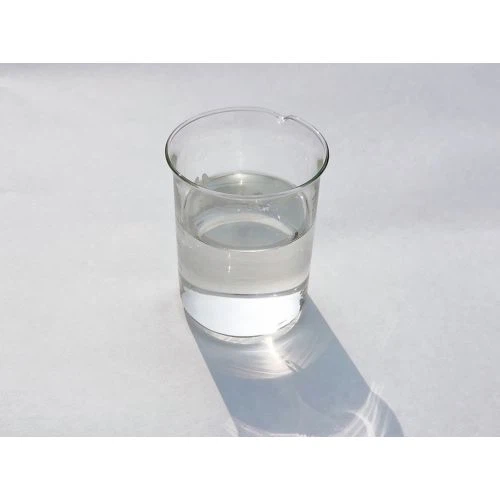
Now, talking about our products. We offer a wide range of alkanes, and one of our popular ones is cyclohexane. Cyclohexane ((Cyclohexane)) has a unique structure. It's a cyclic alkane, but it doesn't follow the general (C_{n}H_{2n+2}) formula of linear or branched alkanes. Instead, its molecular formula is (C_{6}H_{12}), which follows the general formula for cycloalkanes (C_{n}H_{2n}).
Cyclohexane has many important applications. It serves as a Cyclohexane – Polymer Grade Solvent For High - Performance Polyolefins. In the production of high - performance polyolefins, it helps in the polymerization process by providing a suitable environment for the reaction to take place. It also acts as a Cyclohexane – Rubber Processing Solvent For Adhesives And Elastomers. In rubber processing, it can dissolve rubber and other additives, making it easier to form adhesives and elastomers with the desired properties.
The chemical reactivity of alkanes is relatively low compared to other organic compounds. This is mainly because of the strong carbon - carbon and carbon - hydrogen single bonds. However, they can undergo combustion reactions. When alkanes react with oxygen, they produce carbon dioxide and water, releasing a large amount of energy in the process. That's why they're such great fuels. For example, the combustion of methane is given by the equation (CH_{4}+2O_{2}\rightarrow CO_{2}+2H_{2}O).
Another reaction that alkanes can undergo is halogenation. In the presence of light or heat, alkanes can react with halogens like chlorine or bromine. For example, when methane reacts with chlorine in the presence of light, it forms a series of products starting with chloromethane ((CH_{3}Cl)), then dichloromethane ((CH_{2}Cl_{2})), trichloromethane ((CHCl_{3})) and finally tetrachloromethane ((CCl_{4})).
As a supplier, we ensure that all our alkanes meet the highest quality standards. We have a strict quality control process in place to make sure that the products we deliver are pure and free from any contaminants. Whether you need a small quantity of alkanes for research purposes or a large - scale supply for industrial applications, we've got you covered.
If you're in the market for alkanes, we'd love to have a chat with you. We can discuss your specific requirements, provide you with detailed product information, and offer competitive prices. Our team of experts is always ready to help you make the right choice for your needs. So, don't hesitate to reach out and start a conversation about your alkane procurement.
References
- Brown, T. L., LeMay, H. E., Bursten, B. E., & Murphy, C. J. (2017). Chemistry: The Central Science. Pearson.
- McMurry, J. (2015). Organic Chemistry. Cengage Learning.